Half the phone calls I get start with the same question: fiberglass or gunite? After fifty years of building both, I can usually answer it within one walk of the yard. Here is how I decide, so you can start deciding before I get there.
Start With Shape
A fiberglass pool comes out of a mold. The manufacturers we build with offer proven shapes in proven sizes, and for most families one of them fits the yard beautifully. But a mold is a mold. If your heart is set on a sixty-foot lazy river, a beach entry wider than a truck, or a shape that follows your ridgeline, gunite is the answer, because gunite is sculpted on site in any geometry you can draw. My rule: if the catalog fits your dream, fiberglass earns real consideration. If your dream outgrows the catalog, stop fighting it and build gunite.
Then Look at the Calendar
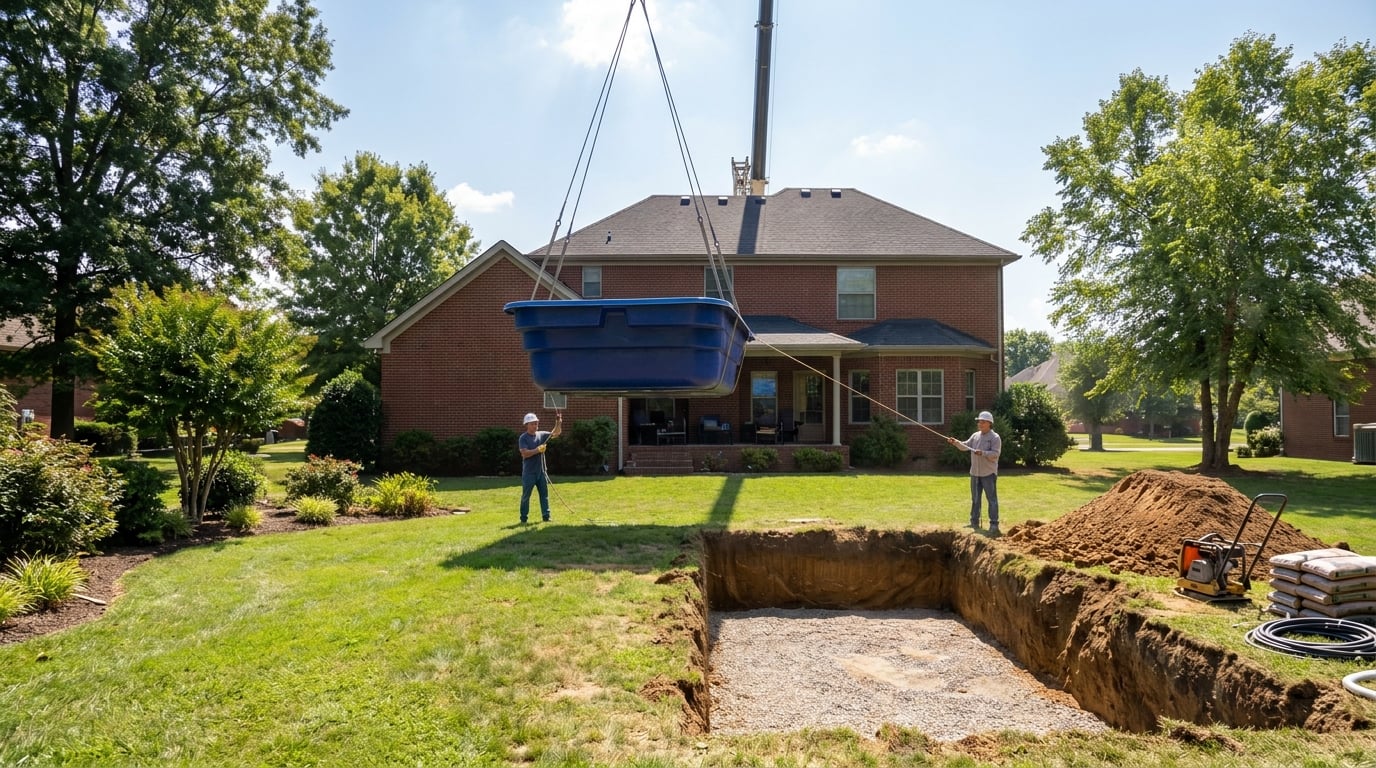
Once the permit clears, a fiberglass installation typically runs four to eight weeks. The shell arrives finished, we set it in an over-dug hole on clean gravel, plumb it, and deck it. Gunite runs eight to sixteen weeks, because the shell is built where it sits: excavation, steel, shotcrete, cure time, tile, and plaster. If you want to swim this same summer and you are calling me in April, fiberglass is usually the honest recommendation. If the pool is a next-spring project, the calendar stops mattering and the other factors take over.
Upkeep Is Where Fiberglass Quietly Wins
The gelcoat surface of a fiberglass pool is smooth and nearly non-porous. Algae has a hard time gripping it, so you use less chemical, brush less often, and never face an acid wash. A gunite pool’s plaster finish is porous, drinks a little more chemical, and wants replastering somewhere down the road. Neither of those is a defect. It is the trade you make for unlimited shape. But if low maintenance is near the top of your list, fiberglass keeps its lead every year you own it.
The wrong answer is not fiberglass or gunite. The wrong answer is the right shell on the wrong site work. Both succeed when the ground is read honestly and the dig is priced before the bid.
What Middle Tennessee Ground Says About It
Around here the ground votes too. Limestone runs shallow under much of Middle Tennessee, and clay holds water against whatever we put in it. A fiberglass shell needs an over-dug hole, quality gravel backfill, and a real drainage plan, because careless backfill is the one thing that can flex its walls. Gunite shrugs at rock but costs more to carve into it. Either way, the excavation gets scoped and priced before you sign, so the rock never becomes your problem mid-project.
The Money, Plainly
Most new pools here land at $80,000 or more once you add the features families actually want, whichever shell you choose. Fiberglass usually starts lower and stays lower over its life because of the upkeep. A custom gunite resort with a spa, ledges, and water features runs $100,000 to $250,000, and it is worth every dollar when the design is the point. Your quote is itemized before you sign either way, and the number you see is the number you pay.
How I’d Decide at Your Kitchen Table
Fiberglass, if a proven shape fits your yard, you want to swim soon, and low upkeep matters most.
Gunite, if the design is the point: a shape no mold offers, a vanishing edge, a resort you sketched on a napkin.
And if you are still torn, walk me through your yard. Fifty years of looking at backyards has made me quick, and the consultation is free either way. E komo mai.